How ready is a heritage museum for AR, VR or MR? Two short self-assessments answer it with a level, a score and a first pilot, built on a study of 161 accredited museums.
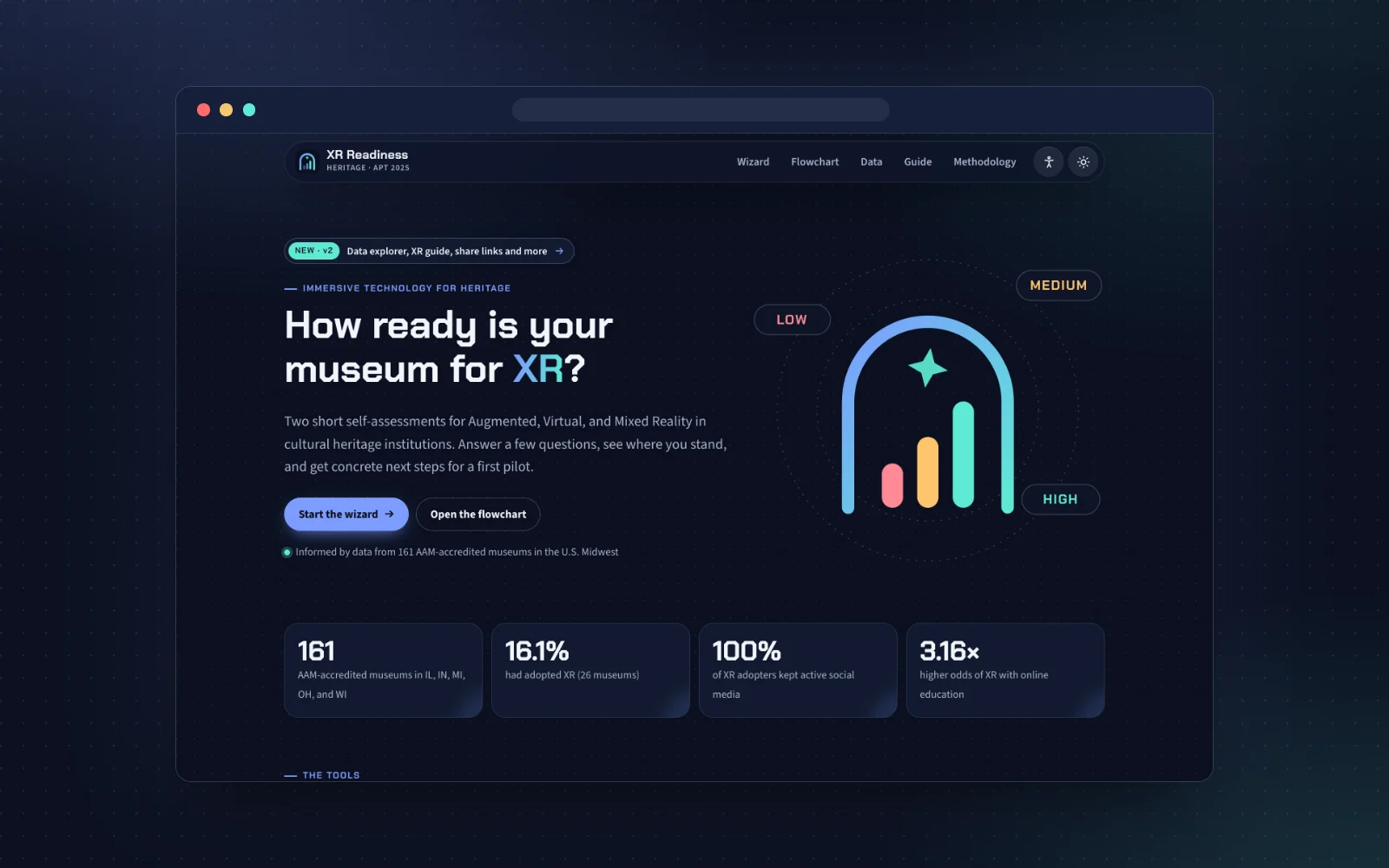
The home page, with the key numbers from the study.
Museum technology
XR adoption
Self-assessment
Data explorer
Web app
161AAM-accredited museums studied
16.1%had adopted XR (26 museums)
3.16×higher odds of XR with online education
APT 2025Student Scholar Award
Summary
In 20 seconds
Two quick self-assessments that tell a heritage museum how ready it is for AR, VR or MR, and what a first pilot could be.
Built on my study of XR adoption in 161 accredited museums in Illinois, Indiana, Michigan, Ohio and Wisconsin.
Every question says how strongly the data supports it, so the result reads as a planning aid, not a prediction.
The question
Public interest in digital access to heritage is high, but XR adoption among museums is uneven. Which traits go with adoption, and how can a museum tell where it stands?
The research
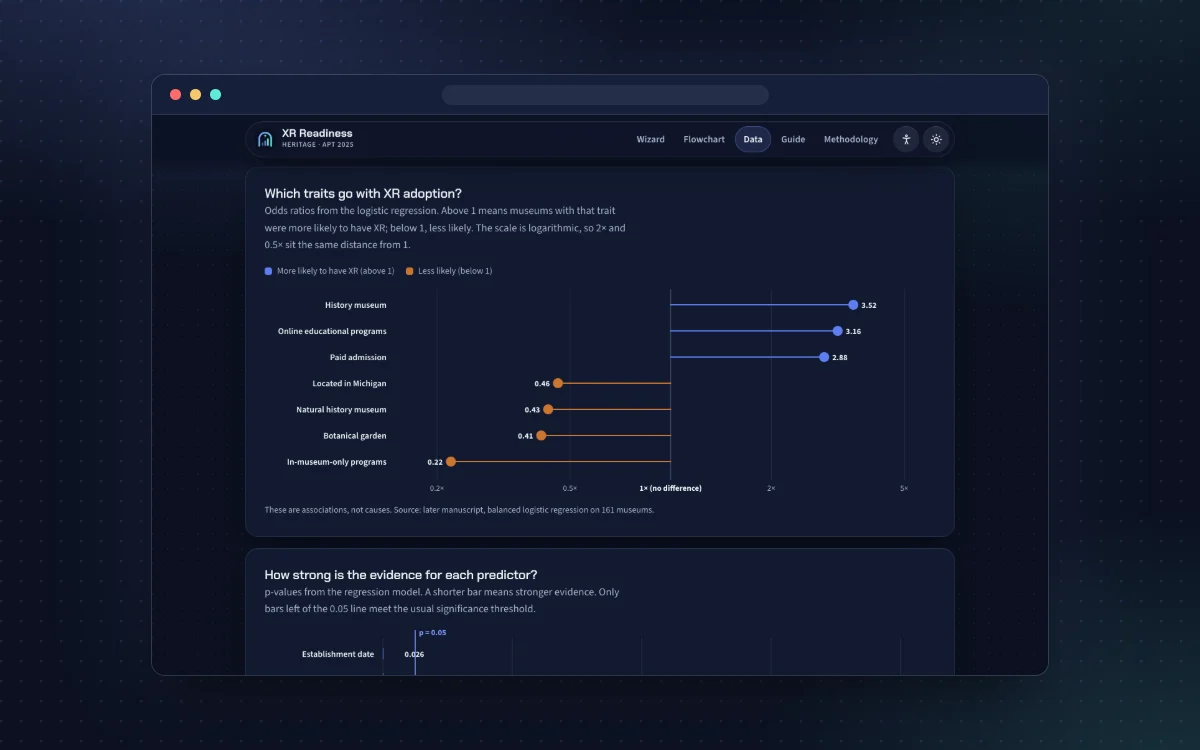
I mapped XR use across 161 AAM-accredited museums in the East North Central U.S. Online education (odds ratio 3.16), paid admission (2.88) and being a history museum (3.52) went with XR; every adopter kept active social media.
The tools
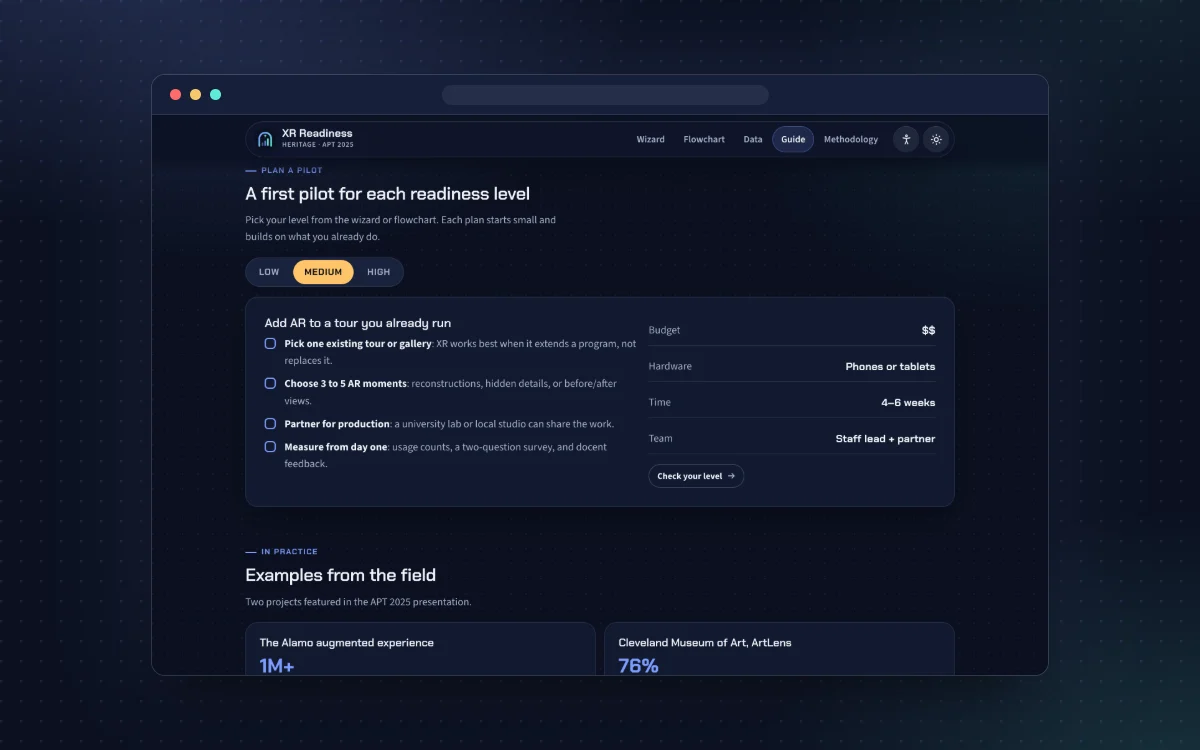
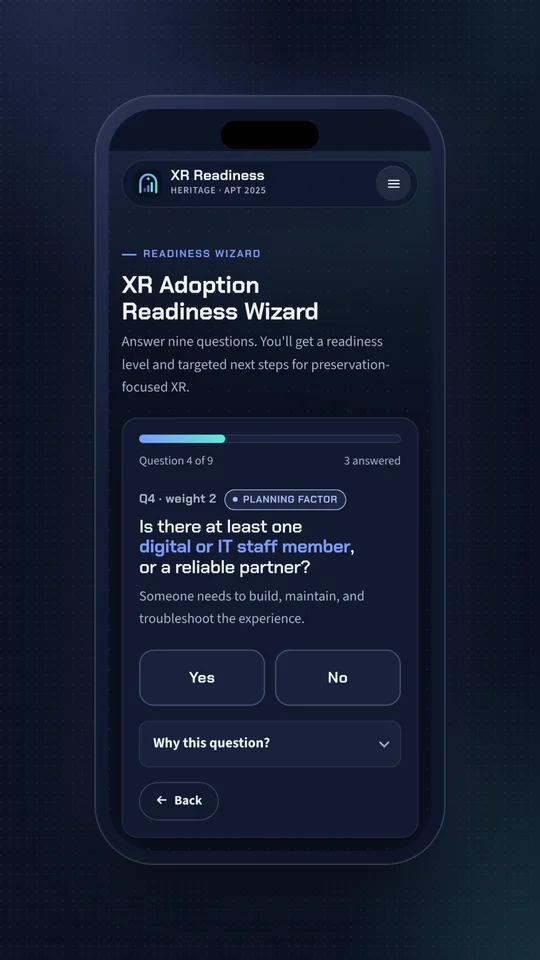
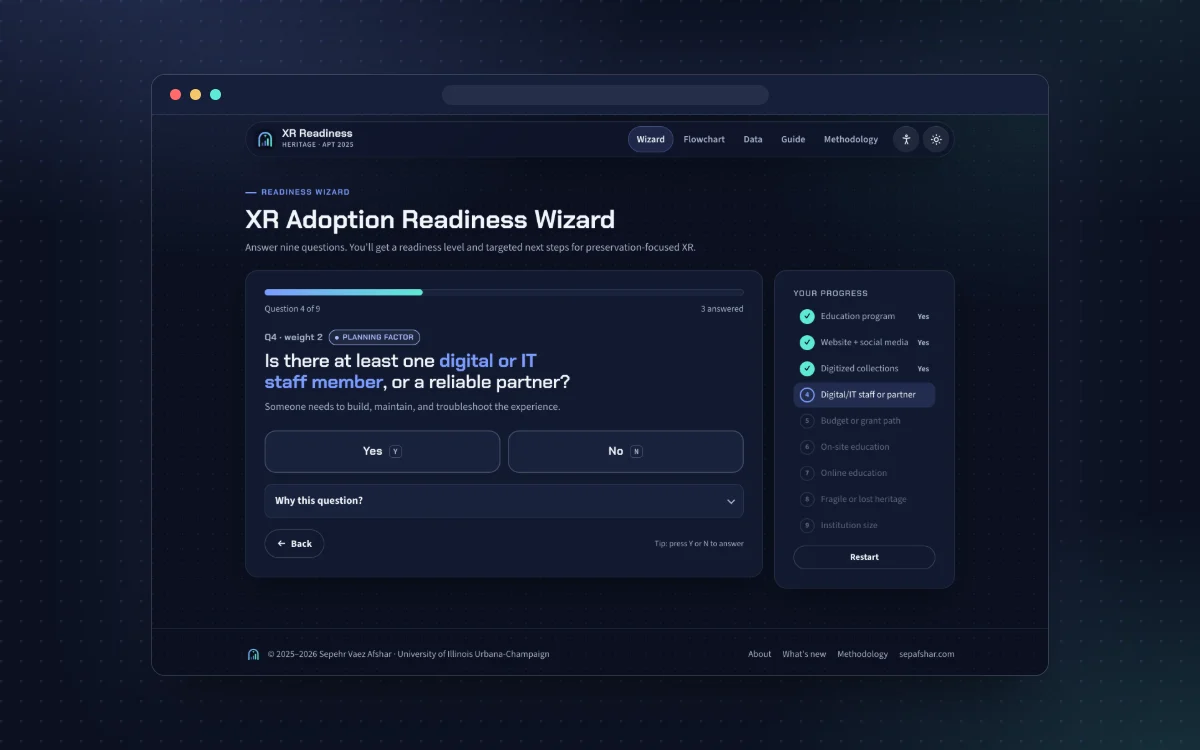
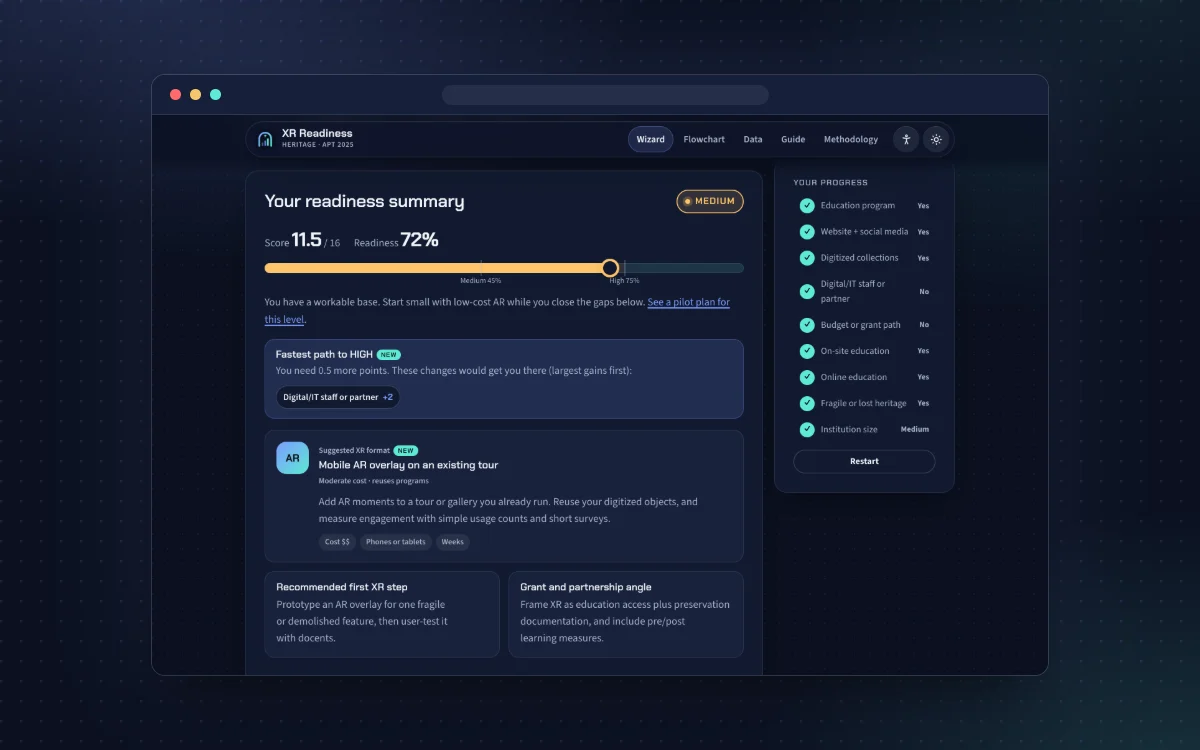
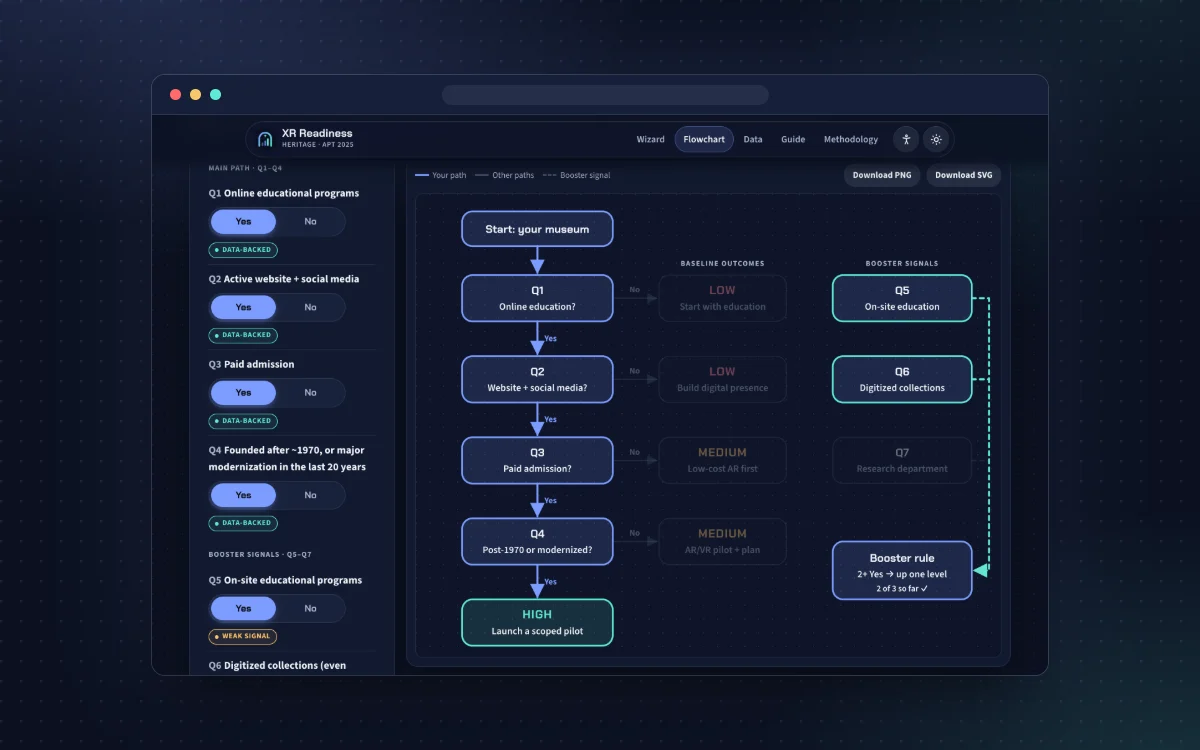
A nine-question wizard gives a Low, Medium or High level, a score and a first step; a seven-toggle flowchart shows the same decision path visually. Version 2 adds a data explorer, an XR guide and share links.
Process
How it works
1AnswerNine short questions on education programs, digital presence, collections, staff, funding and site.
2See where you standA Low, Medium or High level and a score, with the fastest path to the next level.
3Follow the pathThe flowchart lights up the same decision with seven yes/no toggles and three booster signals.
4Check the evidenceThe data explorer shows the study behind every rule, like the odds of XR for each museum trait.
Skills
What I gained
Quantitative researchLogistic regression on 161 museums, odds ratios and significance
Turning research into a toolStudy findings became weighted questions and decision rules
Honest designEach question tagged as data-backed, weak signal or planning factor
Accessible web appsHTML, CSS and JavaScript with contrast, text size and motion options
Results
What I built, Looking back
Readiness Wizard ↗ (opens in a new tab)Nine questions, a level and a score, a recommended first XR step and a funding angle, with a downloadable summary2025
Predictive Rule FlowchartSeven yes/no toggles on a decision tree, exportable as PNG or SVG2025
Data explorerInteractive charts of the 161-museum study2026
XR guideBasics, pilot plans by readiness level and a glossary2026
AccessibleHigh contrast, larger text and reduced motion, saved on the device2026
The dissertation release will extend the dataset nationwide and replace the hand-set weights with validated, data-driven scoring.
Open to Summer 2027 internships and full-time roles from mid-2028. Research collaborations, heritage and museum projects, and anything about XR and games are welcome too. Pick a channel below.
 APT International Student Scholar Award