A cloud design tool that gives a game's designers, artists and developers one shared, layer-based design language for its virtual world. I co-founded the startup and, as CTO, led the product and the prototype.
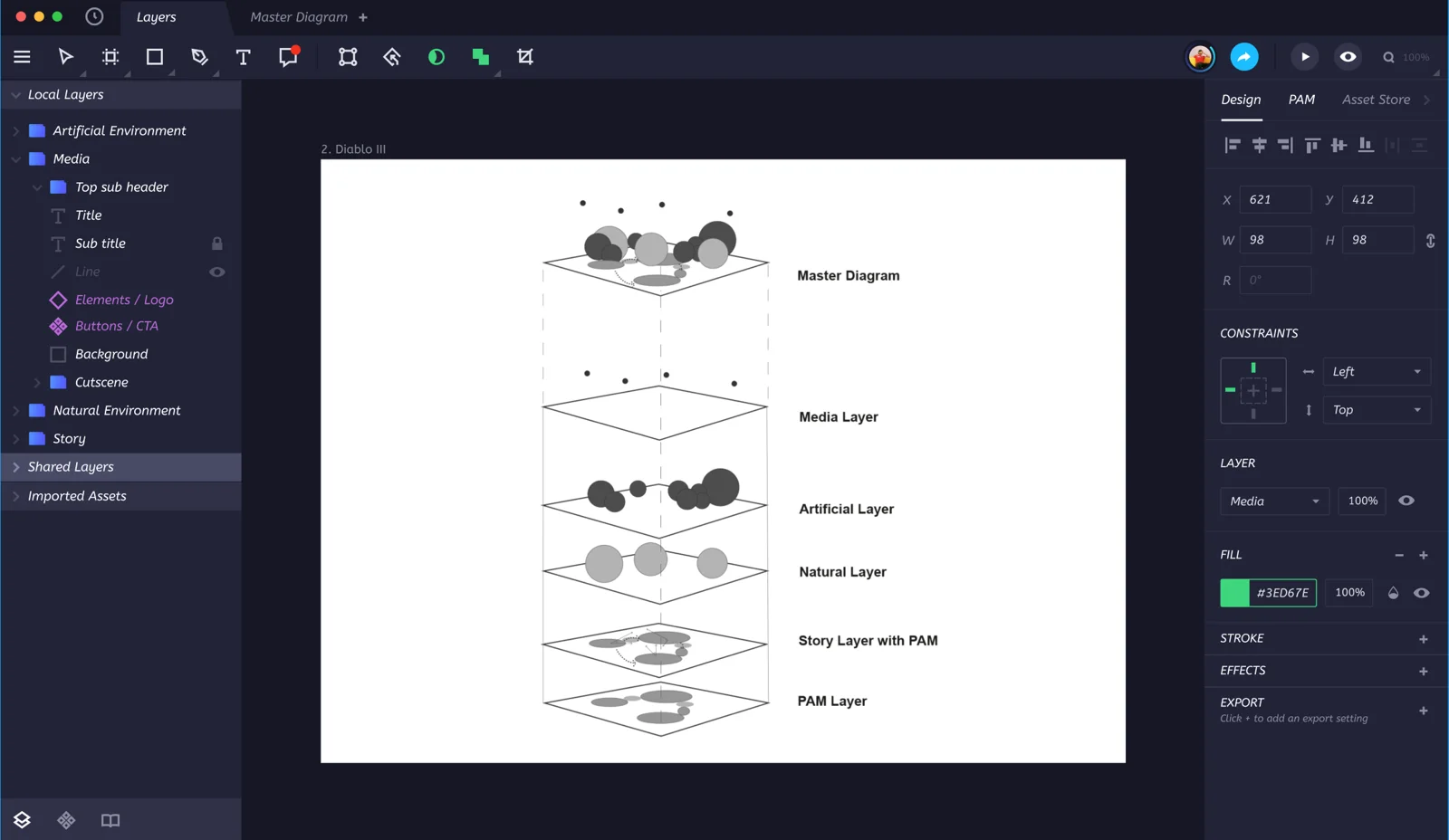
The layer editor: each specialist works on a layer, and the stack becomes the master diagram.
Startup
Game design tool
Cloud collaboration
Virtual landscape
$25KTÜBİTAK 1512 BiGG grant
5Design layers, merged into one master diagram
$100KAWS Activate cloud credits
2Game studios that tested the prototype
Summary
In 20 seconds
A cloud design tool where a game's designers, artists and developers each sketch their own layer of a virtual environment, then see all the layers stacked as one master diagram.
It turned a patented, peer-reviewed design method from landscape architecture into a startup, funded by a TÜBİTAK 1512 grant at İTÜ ARI Teknokent.
As co-founder and CTO I set the architecture, designed the product, hired the developers and led the prototype.
The problem
Early game design is shared as doodles, mood boards and talk. Designers, artists and engineers each picture a different world, so ideas get lost between them, work slows down and the result can end up unbalanced.
The method
OyuNest is built on the Overlay Design Methodology (Kim et al., 2018, Advanced Engineering Informatics), a method patented in South Korea. It classifies any game's virtual landscape with 5 principles and 16 variables, then splits the design into layers that each specialist owns. In its experiments in Korea, France and Germany, teams designed 42% faster and their collaboration rate rose from 23% to 74%.
The startup
We joined the İTÜ Çekirdek pre-incubation program in 2021, won a TÜBİTAK 1512 BiGG grant, incorporated as OyuNest Digital Game and Design Technologies at İTÜ ARI Teknokent, licensed the Korean patent behind the method, and got AWS Activate credits for the cloud.
The prototype
A browser editor with local and shared layers, a library of simple schematic assets, and live presence between team members. Developers at two game studios tried it and told us where it helped most: the pre-production sketch phase, before anything is built in an engine.
The work
The Hellfire study, How the tool works
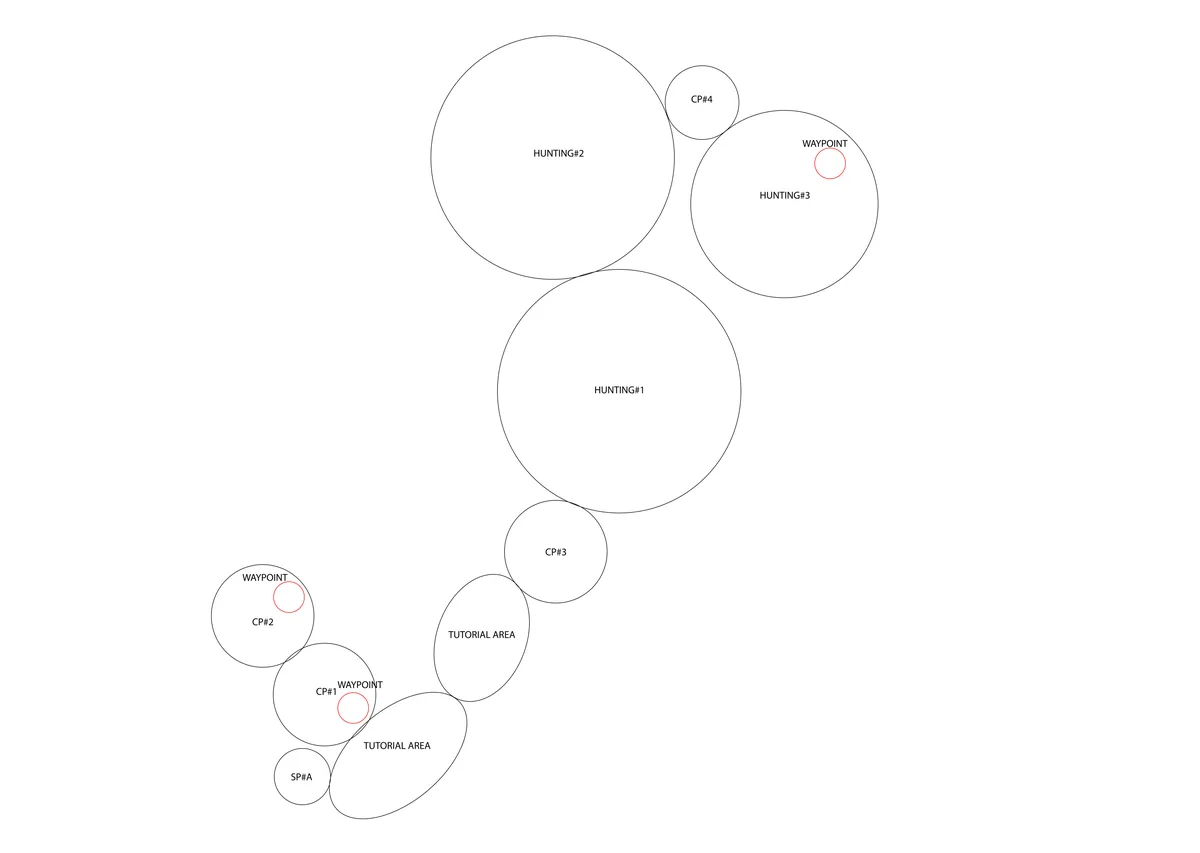
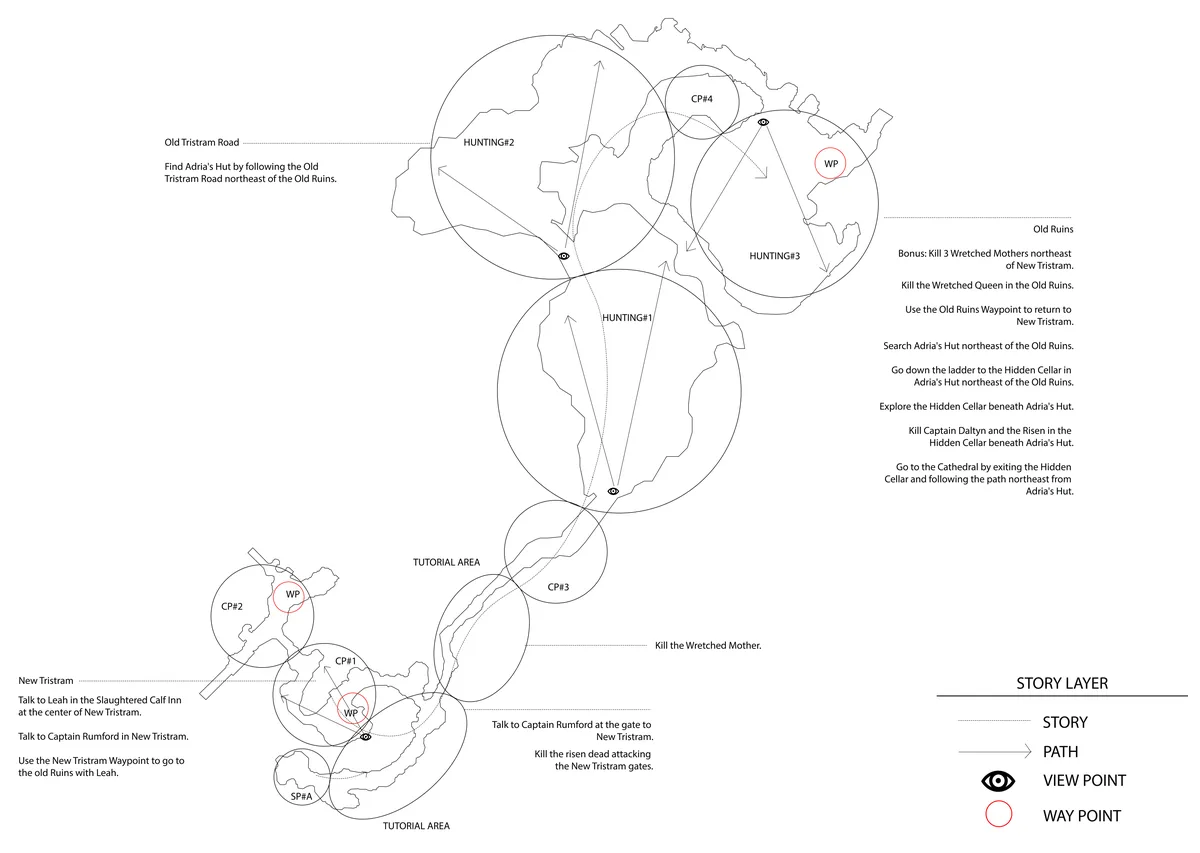
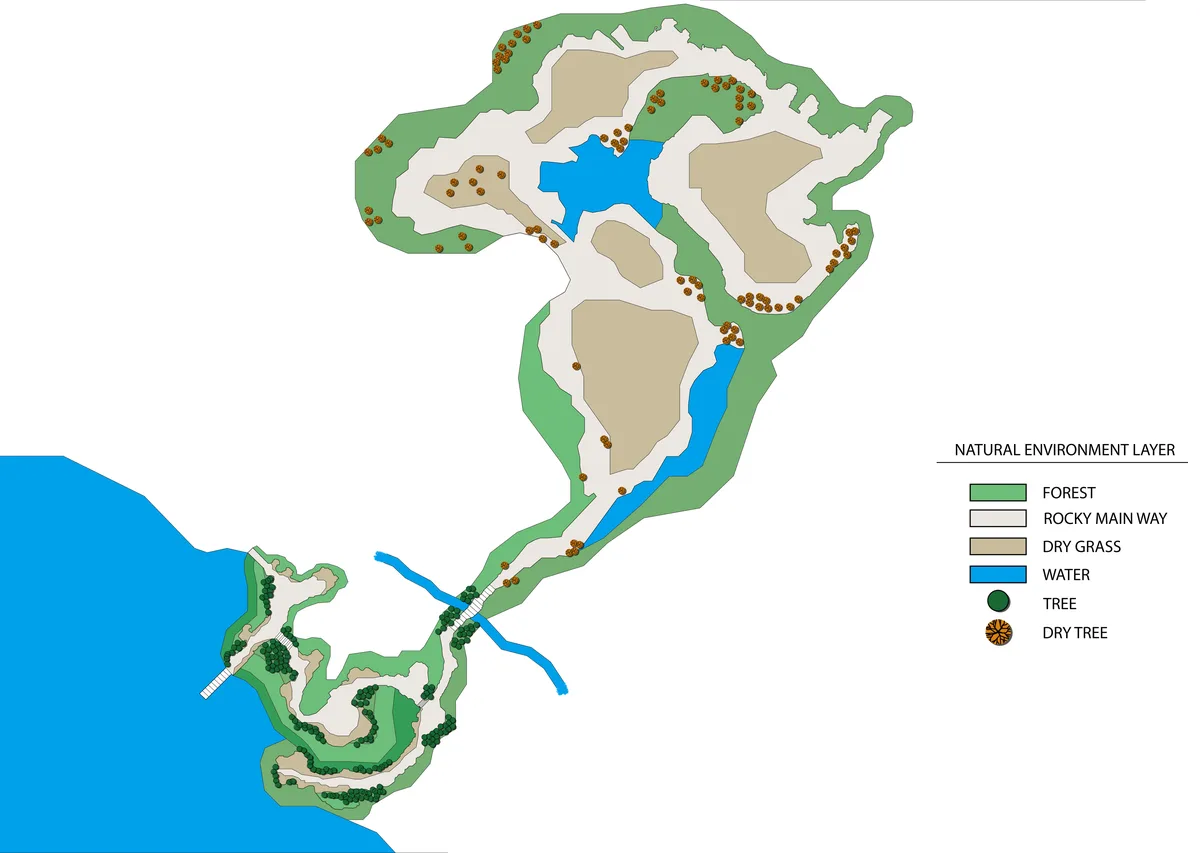
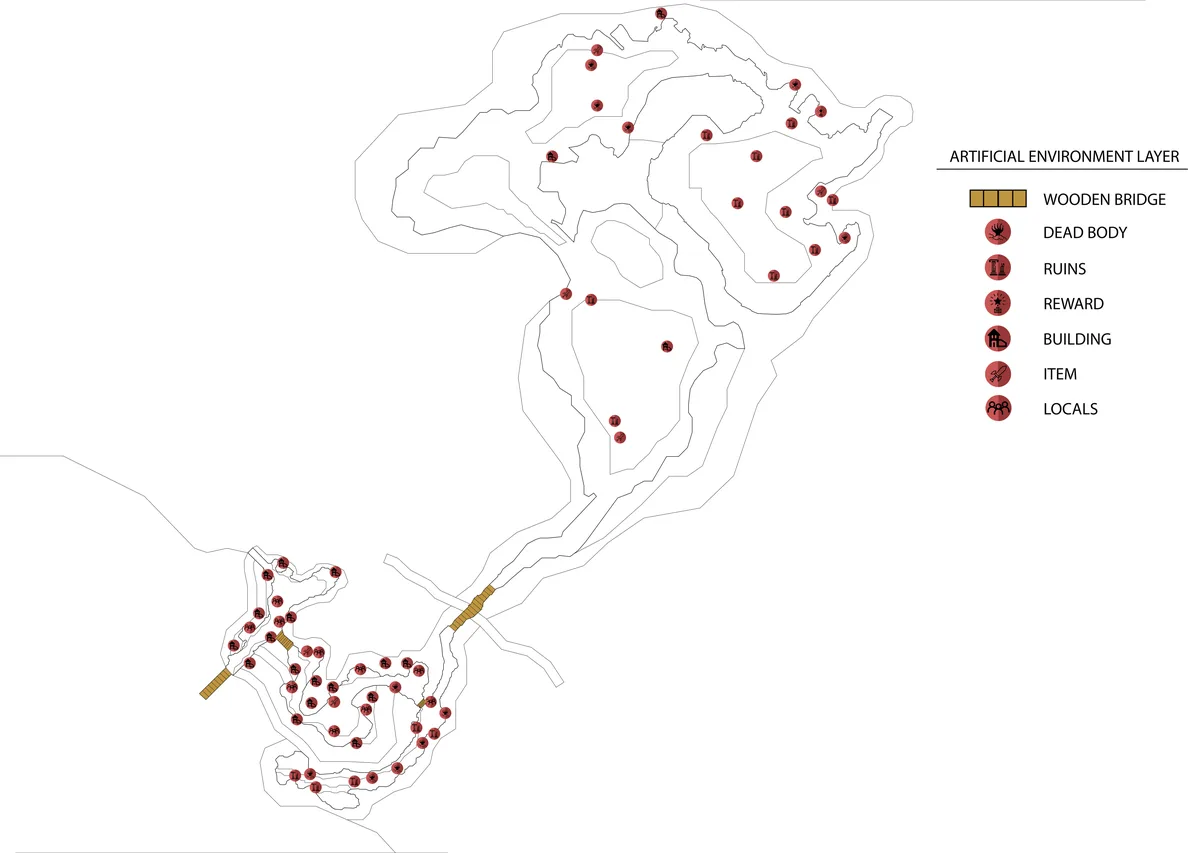
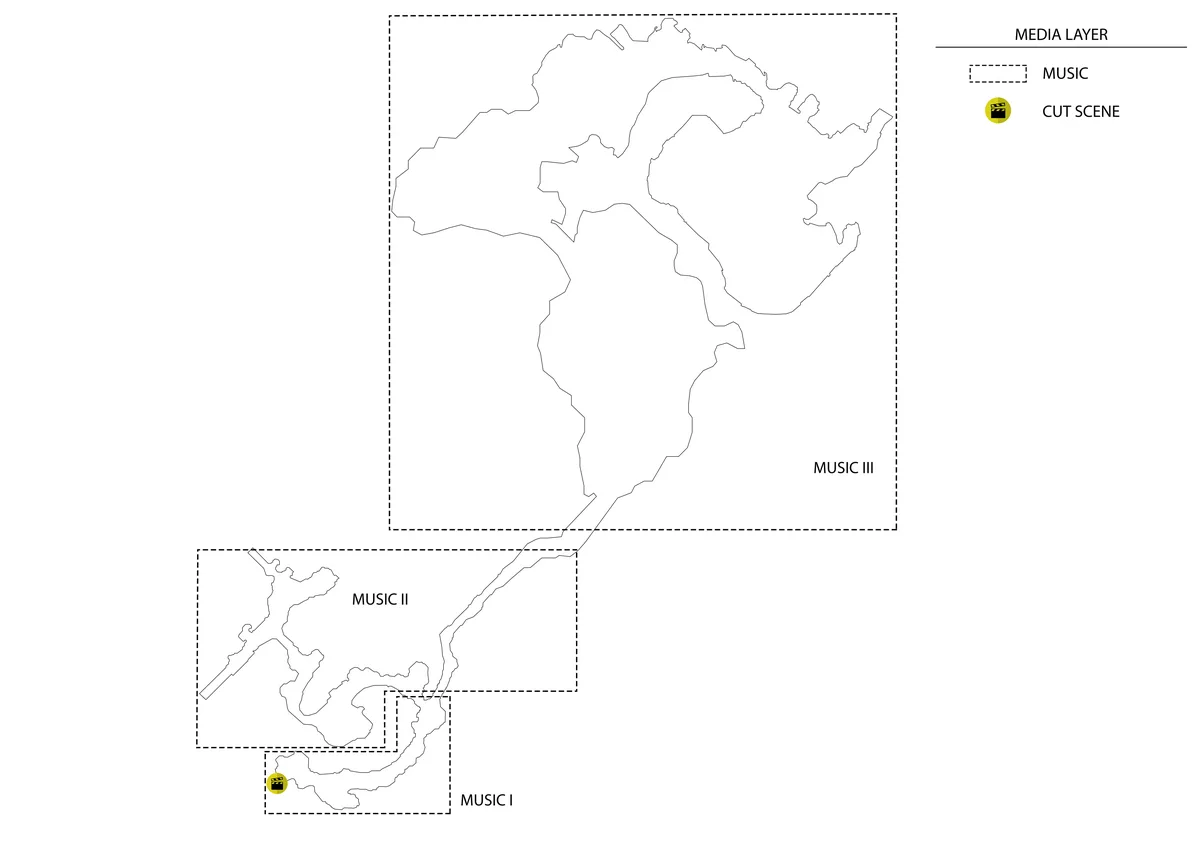
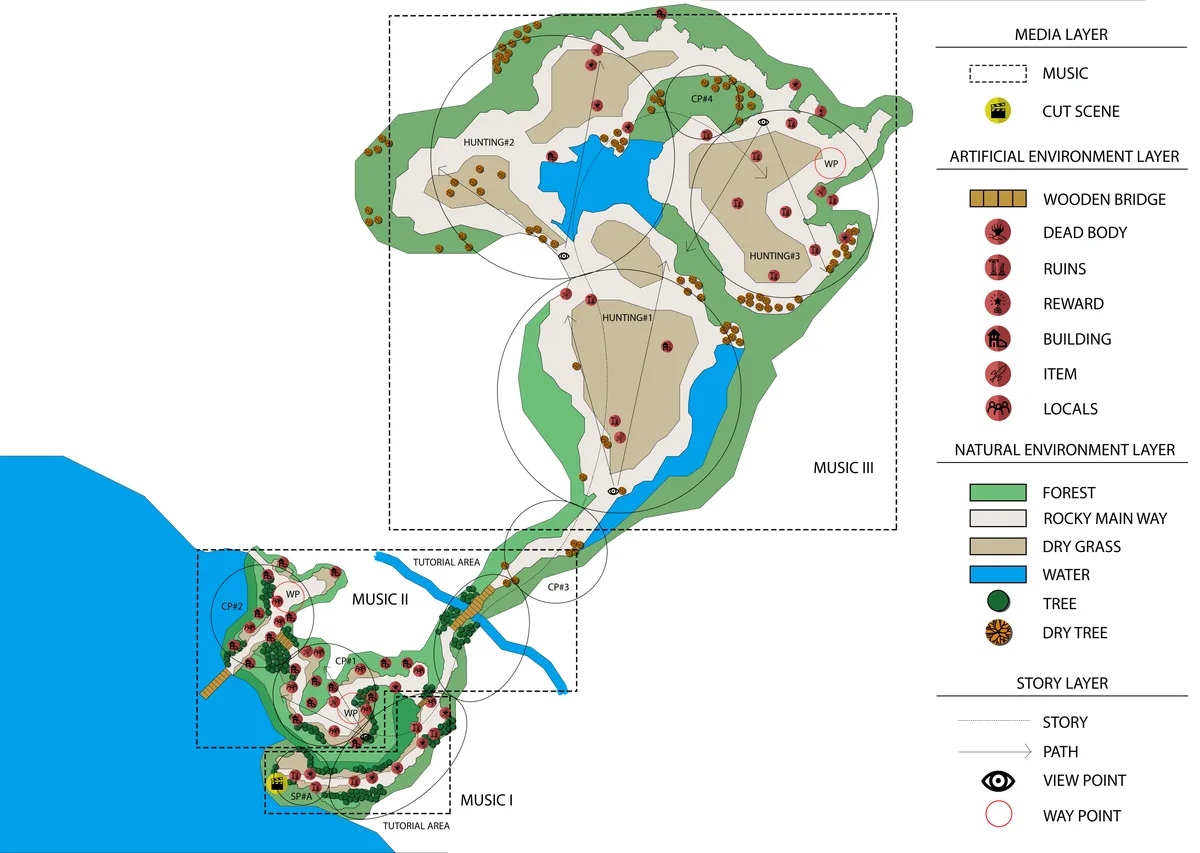
Before the tool, our lab at İTÜ Landscape Architecture tested the method on a real game: we reverse-engineered one area of Diablo III into the five layers, drawing each one by hand, then stacked them into a master diagram.
1Player activityBubbles for where players hunt, rest and travel: tutorial areas, checkpoints, hunting grounds and waypoints.
2StoryThe quest line drawn over the map: the path, the view points and every objective in order.
3Natural environmentForest, rocky paths, dry grass, water and trees, mapped as a landscape architect would map a site.
4Built environmentBridges, ruins, buildings, rewards, items and locals as symbols on the plan.
5MediaWhere each music zone begins and ends, and where the cutscene plays.
6Master diagramAll five layers stacked: the whole area on one sheet, the view the tool was built to give a team.
1Each expert takes a layerStory, natural environment, built environment, media and player activity each get their own layer and owner.
2Set the scale, pick a schemaChoose the map scale and start from a schema in the library, matched to the game's type.
3Drag and dropPlace simple schematic assets on your layer: cubes, spheres, paths and zones, not finished art.
4Check the layersShow, hide and lock layers to see how your part sits against everyone else's.
5Merge the master diagramStack every layer into one master diagram the whole team designs from.
My role
My part, What I gained
2021–2023
Co-founder & CTO
One of the co-founders, with the faculty advisor who created the method.
Technical architecture
Product and UI design
Hiring developers
Grant and pitch decks
Business model
Responsible: mine to deliverShared with the teamSupported others
Product designTurned a research method into a five-step tool and its UI
Technical leadershipChose the stack and led the prototype as CTO
Funding and pitchingGrant applications, incubator juries and investor decks
HiringRan the call for frontend developers and read the applications
Timeline
Project timeline
Point at a phase or a milestone to see its dates.
Results
What I built, Looking back
The Hellfire studySix hand-drawn layer plans of one game area, from player activity to the master diagram, made with our lab2021
Layer editor prototypeBrowser editor with local and shared layers, schematic assets and live cursors between two users2021–2023
Cloud back endJava Spring services with JWT sign-in, WebSocket and Kafka messaging for live collaboration, run on Kubernetes behind Nginx2021–2023
Product and UI designThe five-step flow, the editor and a team dashboard for projects, tasks and messages2021
Grant and pitch decksTÜBİTAK 1512, the İTÜ Çekirdek juries and the investor deck2020–2022
A strong method is not yet a product. The studios were clear: start with one kind of game and one moment in the pipeline, the pre-production sketch, and grow from there.
Related
Papers, awards and talks
Grant2021–23
TÜBİTAK 1512 ESP-BIGG
Online platform design tool for virtual landscape · $25,000
Invited talk2021
From Architecture to Digital Games
Metametrik Wednesday Talks #53, online in Turkish, with Sarvin Eshaghi: from our startups in Iran to serious games and OyuNest
Open to Summer 2027 internships and full-time roles from mid-2028. Research collaborations, heritage and museum projects, and anything about XR and games are welcome too. Pick a channel below.
 TÜBİTAK 1512 ESP-BIGG