Putting an AI agent in an architectural visualization
What we learned building an AI real estate agent into an Unreal Engine walkthrough: the talking was easy, the walking was not.
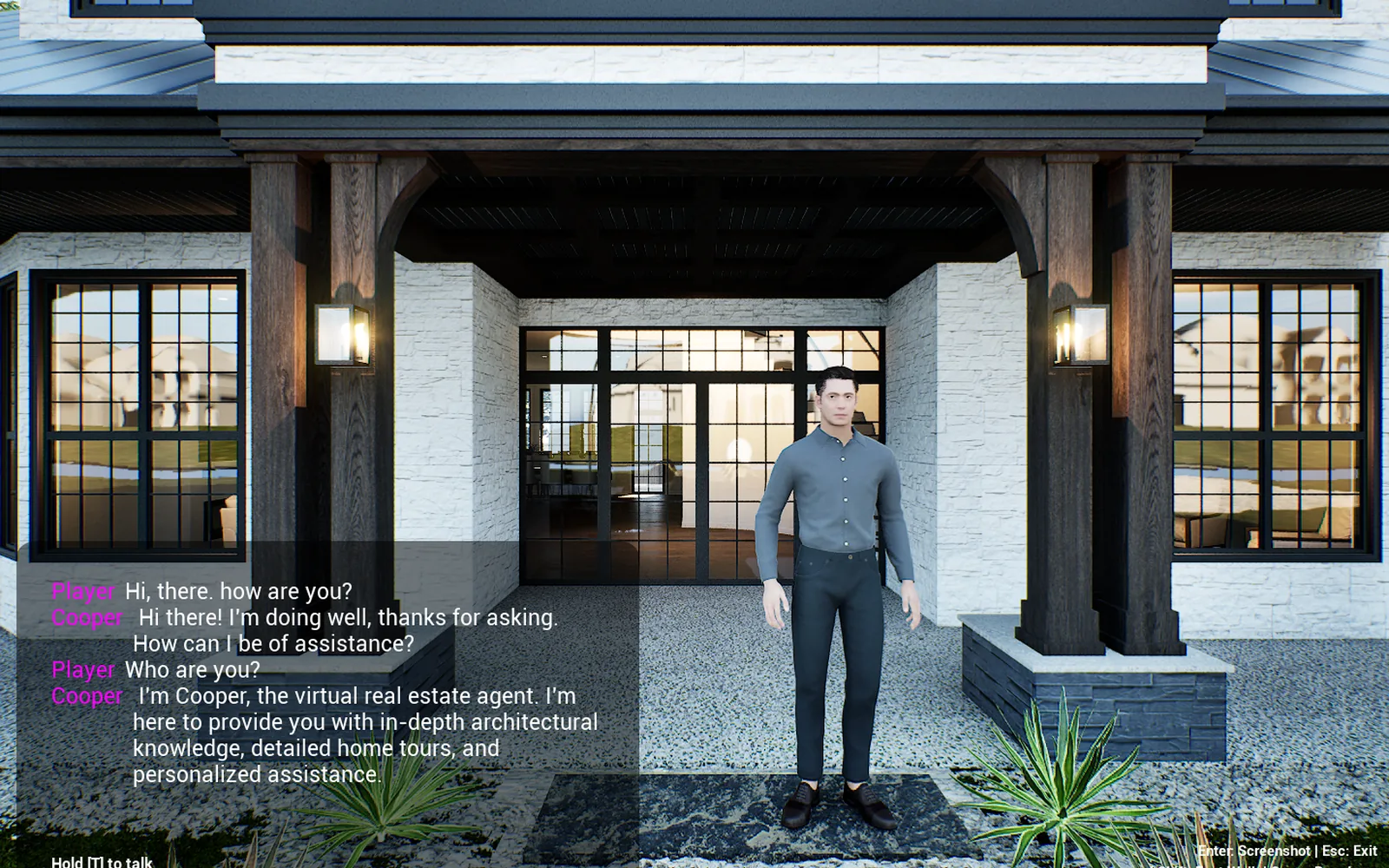
In the summer of 2023, Sarvin Eshaghi and I spent an R&D internship at JHP Architecture / Urban Design asking one question: what if a client could play an architectural visualization instead of looking at renders? We took a house from Archicad into Unreal Engine 5.2, made it walkable, and then gave it a guide.
Why a guide at all
A walkable house is impressive for a minute, then people stop. They do not know what they are allowed to touch, and they miss what the architect wanted them to see. In a showroom, someone walks you through. We wanted the same thing inside the model: a real estate agent who greets you at the door and shows you around.
Why not a scripted NPC
A scripted character needs a finished story, every line written in advance. That is fine for a game that ships once. An architecture firm changes the design every week, and nobody will rewrite the dialogue each time. So we gave the agent a backstory and facts instead of lines: the house, its rooms, the neighborhood, the price. We built it with ConvAI, which answers in voice or text and can speak 21 languages.
The hard part was walking
Getting Cooper, our agent, to talk was the quick part. Getting him to move was the most challenging part of the whole agent. He had to follow the client, walk ahead to the next room, and stop at the right things to point them out. For an AI character, talk comes almost for free. Movement through a real building is where the work is.
What I would try next
These are ideas, not things we built. Tie the agent to the design data, so it can answer "how big is this room?" from the model itself. Log what clients ask, so the architects learn what people actually care about. And test it with real clients, because the only honest measure of a guide is whether people stay longer and understand more.
More posts
 Designing this site's icon with AIHow the robot in the browser tab was made: five rounds of AI concepts, my picks, and why the tab uses a simpler drawing than the app icon.
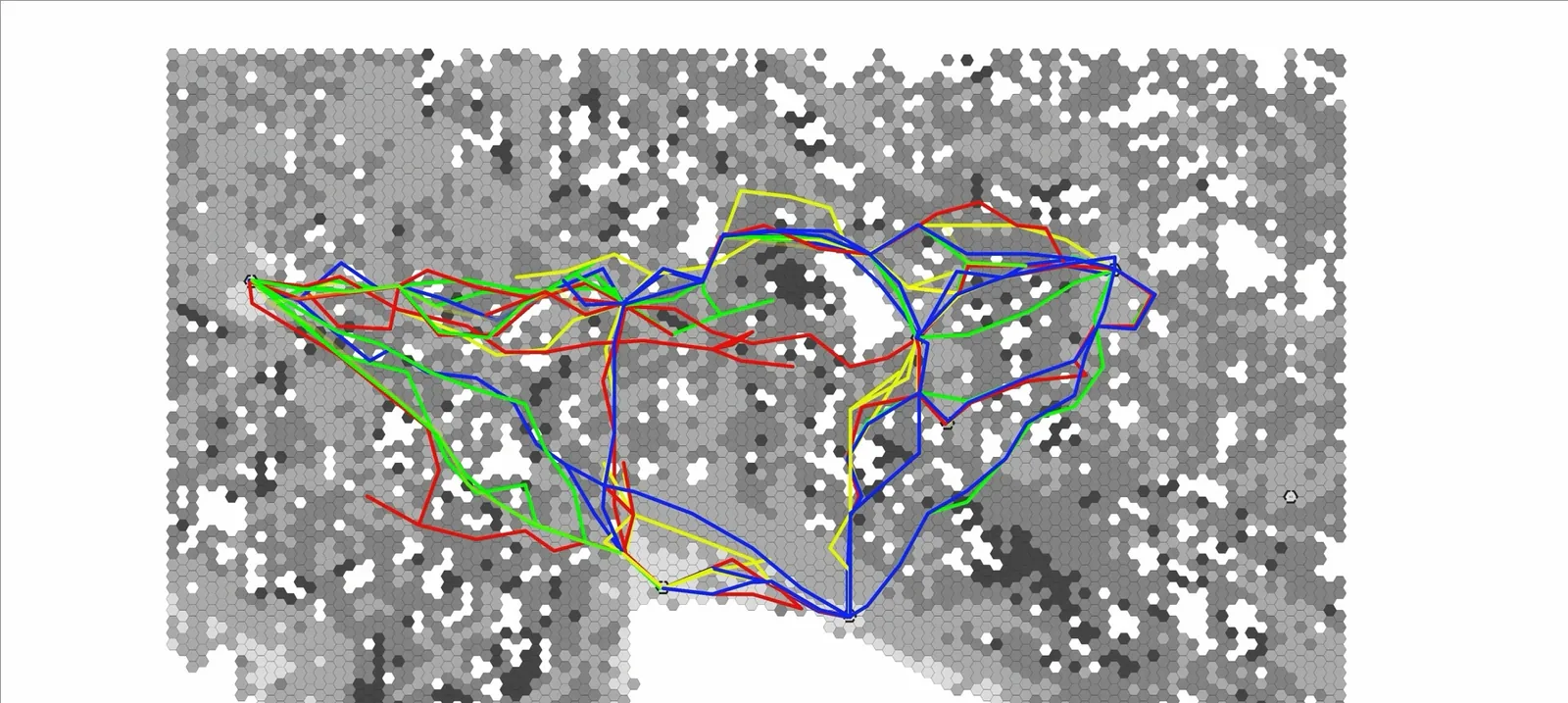 A board game as a research instrumentHow pins, a camera and six playthroughs of bo[AR]d GAME turned players' choices into route data across Anatolia.